The Kitchen Continuum Story
In the early 2000s, a seed was planted during casual conversations with coworkers about the age-old question: “What did you have for dinner last night?”
Those discussions revealed a growing gap—generations were missing basic life skills once taught in Home Economics. With parents working full-time and students juggling sports and academics, the ability to prepare healthy meals was disappearing.
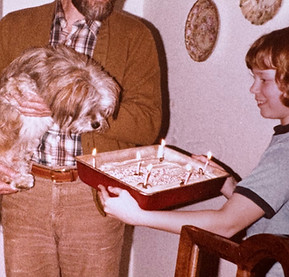
I was fortunate. My mother taught Home Economics, so I learned to cook, budget, and manage daily life skills early on. But I realized I was in the minority. Home Economics classes declined decades ago, and while some skills are now taught under “Family and Consumer Sciences,” many people still struggle with cooking for themselves.
During my graduate studies, I took the opportunity to dig deeper into what is happening when it comes to cooking at home, regardless of age, gender, cultural backgrounds, etc. What I found compelled me to further define what I could do to support the individuals and communities I am a part of.
There have been articles in the last 10+ years highlighting the lack of Home Economics in our schools, and the potential links to childhood obesity:
-
Family and Consumer Sciences classes struggle to find teachers, and the curriculum has been focused on "how to keep countertops clean and tell a teaspoon from a tablespoon" (Danovich, 2018).
-
"Even more than before, parents and caregivers today cannot be expected or relied on to teach children how to prepare healthy meals. Many parents never learned to cook and instead rely on restaurants, take-out food, frozen meals, and packaged food as basic fare." (Lichtenstein, A. H., Ludwig, D.S, 2020).
-
"Many high schoolers spend their days consuming energy drinks and eating Takis, frequently stressed about homework and anxious about friend drama, without realizing the destructive impact and vicious cycle of their cumulative habits." (Leitner, 2025).
Recent articles have highlighted that there is an opportunity to help our aging communities when it comes to their nutritional needs as well:
-
In a 2023 study by Tani et. al titled "Cooking Skills, living alone and mortality: JAGES cohort study", they highlighted from additional studies that people over 65+ with cooking skills ate at home more, and made overall healthier choices.
-
The article, "Food Behavior Change in Late-Life Widowhood: A Two-Stage Process," found that overall attitudes change with widowhood. They found women's mental models for meal prep change, passing through two stages: developing new routines and re-establishing their personal food system after their spouse's illness or death. In this same article, it was identified with early intervention: providing information and resources to guide healthy, convenient food choices—potentially fostering healthy new habits during the transition (Vesnaver, et. al (2015).
Armed with the information from my studies, that seed grew into The Kitchen Continuum:
A consultancy where as an adaptive leader, I can meet individuals and families where they are, supporting them without judgment on their journey to develop cooking skills. My values—collaboration, courage, optimism, and philanthropy—guide my mission to create spaces where people can learn, share, and grow together.
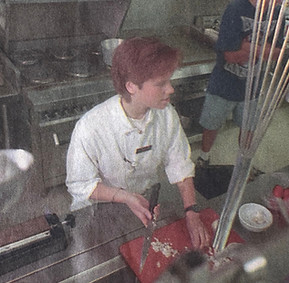
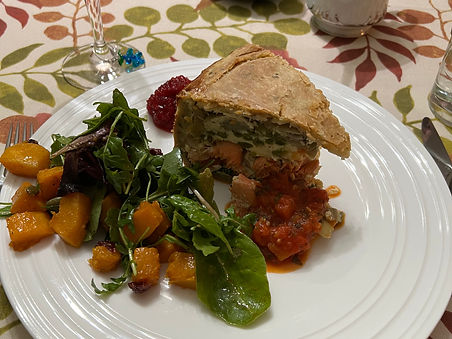
Cooking skills exist on a continuum, from basic meal preparation to advanced culinary mastery. Wherever you are on that continuum, I’m here to help you move forward—because cooking isn’t just about food; it’s about connection, confidence, and community.


Mission
To empower participants to improve their well-being, build healthier communities, and our environment through accessible education, practical resources, and a judgment-free environment.
My goal is to foster lasting connections and transform lives, one meal at a time.
Purpose
To cultivate an inclusive and supportive community where individuals and families—regardless of age or background—can gain the knowledge, skills, and confidence to prepare nutritious meals, make informed food choices, and overcome cooking-related fears.
Vision
Create an inclusive and supportive environment where individuals and families regardless of their age, or background, can gain the skills, knowledge and self-confidence to prepare nutritious meals, make informed food choices, for not just themselves, but also our environment.
